도안 목록으로 돌아가기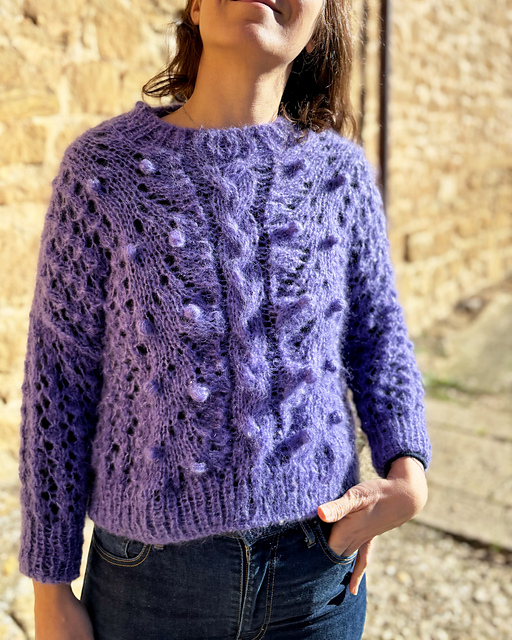
 무료
무료
 무료
무료
Pullover유료 도안
Negua
디자이너: Esti Juango
난이도0.0
바늘 크기
6.5mm
실 굵기굵은 실 (10~12합)
(Aran (8 wpi))
(Aran (8 wpi))
좋아요45
ADVERTISEMENT
도안 상세 설명 구글번역기로 번역하기
**INSPIRATION**
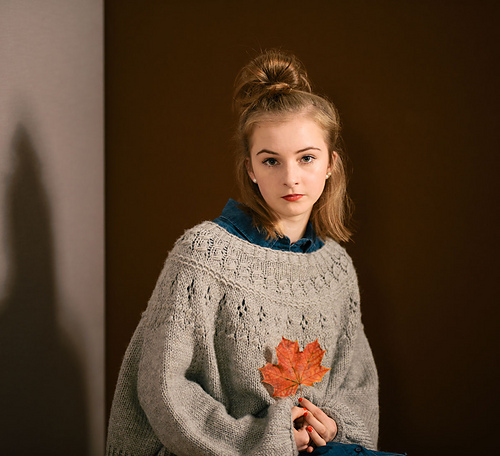
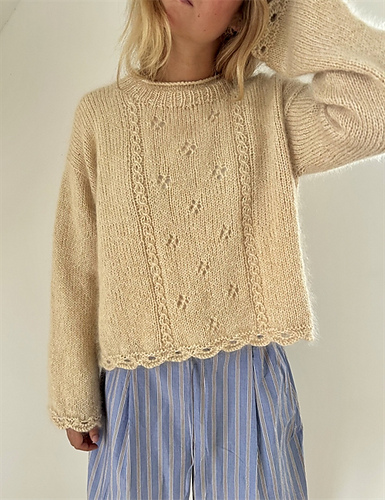
Negua means winter in Basque. A time of meditation in which knitwear becomes our great ally and invites us to introspection. In this pattern you will find textures created by openwork, cable knits and bobbles. The repetitiveness of the pattern will turn the initial challenge into a structure of repetitions with which you will become familiar.
**DIFFICULTY LEVEL. WHAT DO YOU NEED TO KNOW?**
Intermediate. To knit, purl, make increases & decreases and to work in the round.
*Pattern has been tech edited and tested*
**SIZES**
1 (2, 3, 4, 5) (6, 7, 8, 9, 10) with final measurement of the sweater after blocking of bust width of 100 (110, 120, 130, 140) (150, 160, 170, 180, 190) cm/ 39.25 (43.25, 47.25, 51.25, 55) (59, 63, 67, 70.75, 74.75)”
Positive ease of around 15-20 cm/ 6-8”.
**MATERIALS**
• Yarn: Bilobila “Alfa” – 50 gr; 100 m (109,5 yds). 98% superkid mohair, 2% silk. Aran weight yarn. [Link to the yarn.][1]
• Amount: 4 (5, 5, 6, 6)(7, 8, 9, 10, 11) skeins of 50 gr
• Total in m: 400 (500, 500, 600, 600) (700, 800, 900, 1000, 1100) m
• Total in yds: 438 (547.5, 547.5, 657, 657) (766.5, 876, 985.5, 1095, 1204.5) “
• Circular 6,5 (US 10.5) mm needle to work in the round the body and sleeves
• Circular 5,5 (US 9) mm needle for the collar
• Markers. A different BOR marker. 4 locking markers
• Stitch holders
• Tapestry needle
**GAUGE**
In a 10x10 cm (4x4 in) gauge you should have 12 sts and 22 rounds worked with 6,5 (US 10.5) needles in lace back stitch, in the round. (Video- Knitty Natty Knitting Tutorials).
**CONSTRUCTION NOTES**
The pullover is started at the back neck and then increased to the full width of the back. After, those stitches are picked up along the sloped shoulders for the fronts. The pieces are joined at the underarm and the body is knitted in one piece in the round. The sleeve stitches are then picked up from the body and worked in the round. Stitches for the collar are picked up and worked with an elastic rib.
-----Spanish/ Español-----
**INSPIRACIÓN**
Negua significa invierno en euskera. Un tiempo de recogimiento en el que el punto se convierte en nuestro gran aliado y nos invita a la introspección. En este patrón encontrarás texturas creadas por calados, trenzas y bodoques. La repetitividad del esquema hará que el desafió inicial se convierta luego en una estructura de repeticiones con la que te familiarizarás.
**REQUISITOS PREVIOS – NIVEL INTERMEDIO**
Saber tejer derecho, revés, hacer aumentos y disminuciones. Tejer en circular.
*El patrón ha sido testeado y editado tecnicamente*
**TALLAS**
1 (2, 3, 4, 5) (6, 7, 8, 9, 10) con contorno de pecho en prenda bloqueada de 100 (110, 120, 130, 140) (150, 160, 170, 180 , 190) cm. Holgura positiva de unos 15-20 cm.
**MATERIALES**
• Lana: Bilobila “Alfa” – 50 gr; 100 m (109,5 yds). 98% superkid mohair, 2% seda. Grosor Aran. [Ir a la web de bilobila][2]
• Cantidad: 4 (5, 5, 6, 6) (7, 8, 9, 10) ovillos de 50 gr
• Total en m: 400 (500, 500, 600, 600) (700, 800, 900, 1000) m
• Agujas circulares de 6,5 mm para el cuerpo y mangas
• Agujas circulares de 5,5 mm para el cuello (cortas o largar para magic loop)
• Marcadores. Un marcador distinto para el inicio. 4 Marcadores de imperdible
• Imperdible o hilo adicional para dejar los puntos en espera
• Aguja lanera para rematar los hilos
**TEJIDO DE MUESTRA**
En una muestra tejida en circular de 10 x 10 cm en punto calado 12p por 22 vueltas. Ver vídeo (desde min. 9) para muestra circular. Bloquea la muestra para poder medirla. Teje una muestra de unos 15 x 15 cm, para poder contar bien la muestra en el centro.
**NOTAS DE CONSTRUCCIÓN**
La prenda se empieza en la parte trasera del cuello y luego se aumentan los puntos hasta alcanzar el ancho completo de la espalda. Después, esos puntos se recogen a lo largo de los hombros inclinados para los frentes, se montan puntos para el cuello uniendo los delanteros. Las piezas se unen en la sisa y el cuerpo se teje en una sola pieza en circular. Luego, los puntos de las mangas se recogen del cuerpo y se trabajan en redondo.
[1]: https://www.bilobila.eus/handmade-vase-shimai1
[2]: https://www.bilobila.eus/handmade-vase-shimai1
* 이 도안은 유료이므로 Ravelry에서 별도 구매가 필요합니다.
비슷한 느낌의 도안들
옆으로 밀어서 보기 →Bellwether
by Caitlin Hunter
무료Step by Step Sweater
by Florence Miller
Olga Sweater
by PetiteKnit
4 Little Faroese
by Sus Gepard
Ranunculus
by Midori Hirose
Cloud Sweater
by PetiteKnit
무료Stine
by Stine Radicke
Heritage Pullover
by Rose.thornsandneedles
Clover Sweater
by LE KNIT by Lene Holme Samsøe
Frankie Sweater
by PetiteKnit