도안 목록으로 돌아가기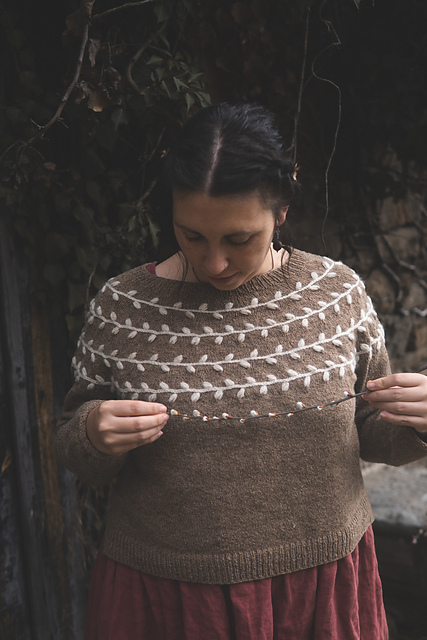
 무료
무료
 무료
무료
 무료
무료

Pullover유료 도안
Salzia
디자이너: Elena Solier Jansà
난이도0.0
바늘 크기
3.5mm
실 굵기보통 가는 실 (4합)
(Fingering (14 wpi))
(Fingering (14 wpi))
좋아요322
ADVERTISEMENT
도안 상세 설명 구글번역기로 번역하기
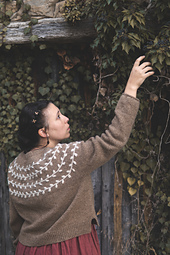
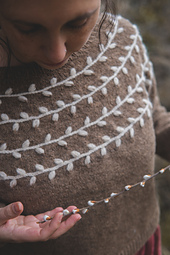
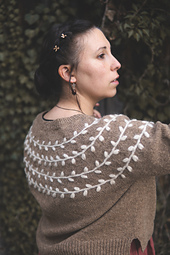
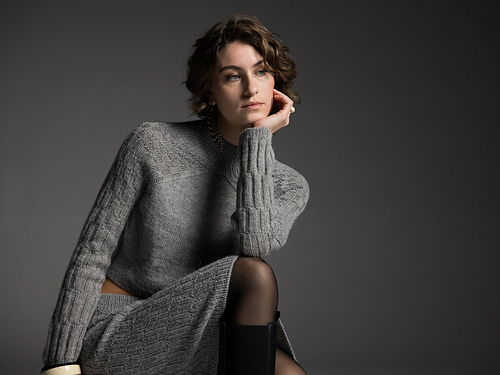
*The yoke of Salzia sweater is inspired by willow blossoms at the very moment they begin to emerge, fragile and full of life. That is why I named it “Salzia”, a completely invented word that alludes to willows, called “salzes” in Catalan.
This sweater is worked seamlessly, in the round, from the top down, and is designed with plenty of ease for a comfortable fit. It begins with the neck ribbing, followed by short rows to improve the shaping in that area. The decorative texture then begins: a playful combination of crochet stitches and knitting, adding movement and a special character to the piece. Once the textured section is complete, the stitches for the sleeves and body are separated, and the knitting continues in stockinette stitch until the end.
The texture is simple and fun to knit. By combining different fibers, you can achieve unique effects: in the sample, a strand of mohair adds softness and volume, evoking the fluffy look of willow blossoms in spring.*
**SIZES**
1 (2, 3, 4) (5, 6, 7) (8, 9, 10)
Finished bust circumference: 82 (92, 102, 112) (122, 132, 142) (152, 162, 172) cm / 32.25 (36.25, 40, 44) (48, 52, 56) (60, 63.75, 67.75)” – recommended to be worn with 10 – 20 cm / 4 – 8” of positive ease at the bust.
**YARN**
***Pastoreta*** (100% wool, 195 m / 213 yds – 50 g). Sample shown is knit in Pardal (MC) and Fum (CC).
MC: 5 (6, 7, 7) [8, 8, 9] {10, 10, 11} balls or aporox. 1009 (1126, 1256, 1315) [1480, 1589, 1704] {1854, 1968, 2084} m / 923 (1030, 1149, 1224) [1354, 1453, 1559] {1696, 1800, 1906} yds of fingering/sport weigh yarn.
CC: 1 ball for all sizes or approx. 85 (90, 100, 100) [105, 115, 115] {125, 130, 140} m / 93 (98.50, 109.25, 109.25) [114.75, 125.75, 125.75] {136.75, 142.25, 153} yds of fingering/sport weigh yarn.
Optional! You can add a thin strand of mohair to the texture. In that case, you’ll need the same meterage as for the CC and you’ll knit the texture holding both strands together.
**NEEDLES**
**Needle A:** Main needle: Yoke, body and sleeves
80 cm / 32" circular needle in the size needed to achieve gauge in stockinette stitch.
Suggested needle: 3.5 mm / US 4
**Needle B:** Ribbing: Neckband and hem
80 cm / 32" circular needle two sizes smaller than the main needle (Needle A).
Suggested needle: 3 mm / US 2.5
You can choose shorter or longer cables whenever it’s convenient.
**Crochet hook:** For the chain and the leaves texture, you’ll need a crochet hook. There’s no specific size required. Otherwise, I suggest using a size that creates a line you’re comfortable with and doesn’t make the stitches too tight, so you don’t lose elasticity on the yoke section. In the sample, a 2.5 mm crochet hook was used.
**NOTIONS**
9 stitch markers (1 to mark de begining of the work and 8 different stitches to mark the raglan lines), 2 stitch holders or scrap yarn, taperstry needle, blocking tools.
____________________
*El canesú del jersey Salzia está inspirado en las flores de los sauces en el instante en que comienzan a despuntar, frágiles y llenas de vida. Por ello lo he llamado “Salzia”, un nombre totalmente inventado pero que hace alusión a los sauces, llamados “salzes” en catalán.
Este jersey se teje sin costuras, en circular, de arriba hacia abajo, y está diseñado para vestirlo con bastante holgura. Se inicia con el elástico del cuello, seguido de unas vueltas cortas que mejoran el ajuste en esa zona. A continuación comienza la textura decorativa: un juego entre puntos de ganchillo y dos agujas que aporta dinamismo y un aire especial a la prenda. Tras completar la textura, se separan los puntos de las mangas y el cuerpo, y el tejido continúa en punto liso hasta el final.
La textura es sencilla y entretenida de tejer. Además, al combinar diferentes fibras, se pueden lograr efectos sorprendentes: en la muestra, una hebra de mohair añade suavidad y volumen, evocando el aspecto esponjoso de las flores de los sauces en primavera.*
**TALLAS**
1 (2, 3, 4) (5, 6, 7) (8, 9, 10)
Contorno de pecho: 82 (92, 102, 112) (122, 132, 142) (152, 162, 172) cm / 32.25 (36.25, 40, 44) (48, 52, 56) (60, 63.75, 67.75)” – holgura positiva recomendada de 10 – 20 cm / 4 – 8” en el pecho.
**LANA**
***Pastoreta*** (100% lana, 195 m / 213 yds – 50 g). La muestra está tejida en los colores Pardal (MC) y Fum (CC).
CP: 5 (6, 7, 7) [8, 8, 9] {10, 10, 11} ovillos o aprox. 1009 (1126, 1256, 1315) [1480, 1589, 1704] {1854, 1968, 2084} m / 923 (1030, 1149, 1224) [1354, 1453, 1559] {1696, 1800, 1906} yds de hilo fingering/sport.
CC: 1 ovillo para todas las tallas o aprox. 85 (90, 100, 100) [105, 115, 115] {125, 130, 140} m / 93 (98.50, 109.25, 109.25) [114.75, 125.75, 125.75] {136.75, 142.25, 153} yds de hilo fingering.
¡Opcional! Puedes agregar una hebra fina de mohair a la textura. En ese caso, necesitarás el mismo metraje que para el CC y tejerás la textura con las dos hebras juntas.
**AGUJAS**
**Aguja A:** Canesú, cuerpo y mangas
Aguja circular de 80 cm / 32” del número necesario para conseguir la muestra de tensión en punto liso.
Aguja sugerida: 3.5 mm / US 1.5
**Aguja B:** Elásticos: Cuello y dobladillos
Aguja circular de 80 cm / 32” dos números menor que la aguja principal (Aguja A)
Aguja sugerida: 3 mm / US 2.5.
Puedes optar por cables más cortos o largos cuando sea conveniente.
**Ganchillo:** Para la textura de cadeneta y las hojas, necesitarás un ganchillo. No hace falta un tamaño específico. De lo contrario, te aconsejo que uses un número que cree una línea con la que te sientas cómodo/a y que no tense demasiado los puntos, para no perder elasticidad en la sección del canesú. En la muestra se ha usado un gancho de 2.5 mm.
**OTROS:**
9 marcadores (1 para el Inicio de vuelta y 8 diferentes para el raglán), hilo de desecho o sujeta-puntos, aguja lanera, útiles de bloqueo.
* 이 도안은 유료이므로 Ravelry에서 별도 구매가 필요합니다.
비슷한 느낌의 도안들
옆으로 밀어서 보기 →무료Hugs and Kisses
by Thea Vesterby
August Sweater
by Ozetta : Hailey Smedley
무료Step by Step Sweater
by Florence Miller
Olga Sweater
by PetiteKnit
Ranunculus
by Midori Hirose
Mona Sweater
by LE KNIT by Lene Holme Samsøe
Cloud Sweater
by PetiteKnit
무료Lorna Sweater
by Rikke Eliasen
Frankie Sweater
by PetiteKnit
Monday Sweater
by PetiteKnit