도안 목록으로 돌아가기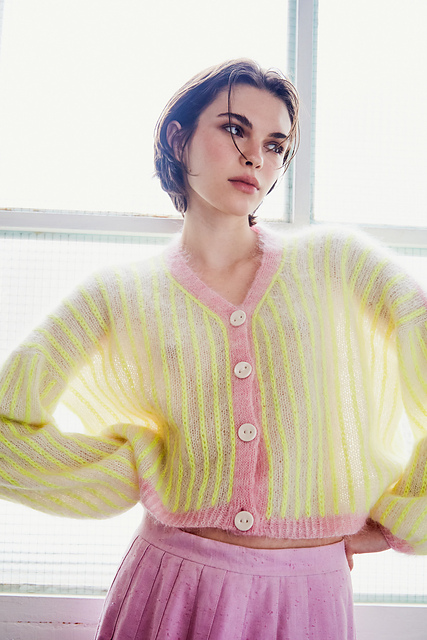


Cardigan유료 도안
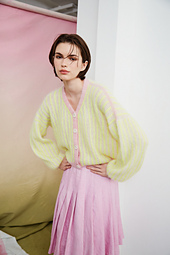
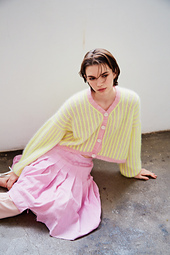
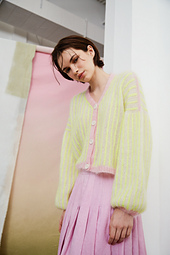
Jellyfish Cardigan
디자이너: María Jesús Camus
난이도0.0
바늘 크기
3mm
(3호)
실 굵기보통 가는 실 (4합)
(Fingering (14 wpi))
(Fingering (14 wpi))
좋아요1667
ADVERTISEMENT
도안 상세 설명 구글번역기로 번역하기
**ENGLISH**
*About the design:*
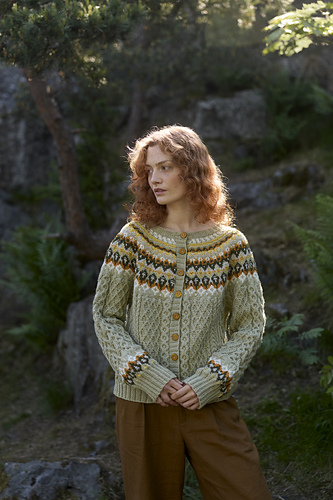
*This garment is constructed from the bottom up and back and forth. It begins with a twisted ribbing hem. Once the hem is finished, the body is worked, maintaining a slipped stitch pattern. At the armhole, the piece is divided into fronts and back, which are worked separately and back and forth. The fronts are mirrored and reach the same total length. The back incorporates German short rows to shape and improve the fit. Once the corresponding length is reached, the shoulders are joined using Kitchener stitch in contrast color. The sleeves are worked in the round picking up stitches around the armhole and working the same slipped stitch pattern as the body. Before the cuffs, a sharp decrease is made to adjust the sleeve width. The cuffs are worked in twisted ribbing. Stitches are picked up along both front edges and the neck edge to create the button placket with buttonholes, worked in double knitting. Finally, the spikes formed by the slip stitch pattern are embroidered using the double stitch technique.*
**Original photos credits**: Vercelli, Verónica, Arte de Tejer 2025, 1a ed, Buenos Aires.
**DETAILS**
**Sizes**: 1, 2, 3 (4, 5, 6) [7, 8, 9] equivalent to 109, 113, 118 (122, 129, 140) [148, 159, 172] cm of bust circumference (final measurements) with approximately 20 cm of positive ease).
**Gauge**: 19 sts y 27 rows = 10 cm measured over flat slipped stitch pattern, with larger needles. To measure the rows, consider a row without slipped stitches.
**Yarn**:
**Yarn A (raw color)**: About 1500, 1560, 1620 (1680, 1770, 1900) [2000, 2150, 2300] meters of lace weight yarn.
**Yarn B (pink color)**: About 185, 195, 200 (210, 220, 235) [250, 265, 285] meters of lace weight yarn.
**Yarn C (yellow color)**: About 440, 460, 475 (495, 520, 555) [585, 625, 670] meters of lace weight yarn.
*Note: The yarn is used double strand held together; this yardage represents the TOTAL amount of yarn. If using fingering weight or single lace yarn, consider half the amount.*
**Sample**
**Yarn A**: Super kid mohair, Corralito Yarns, 475 mt per 50 grams. Raw colorway. 4, 4, 4 (4, 4, 4) [5, 5, 5] skeins.
**Yarn B**: Super kid mohair, Corralito Yarns, 475 mt per 50 grams. Flamingo colorway. 1 skein.
**Yarn C**: Super kid mohair, Corralito Yarns, 475 mt per 50 grams. Acid colorway. 1, 1, 1 (2, 2, 2) [2, 2, 2] skeins.
**Needles**:
Recommended needles (to get the gauge):
3.5 mm circular needles with an 80 cm cable.
3.25 mm circular needles with an 80 cm cable.
3.0 mm circular needles with a 100 cm cable.
For the 3.5 mm and 3.25 mm needles, consider using needles suitable for knitting small circles.
**Notion**s: Stitch markers, stitch holders (or scrap yarn), tapestry needle, mats and pins for blocking.
**ESPAÑOL**
*Sobre el diseño:*
*La prenda se construye de abajo hacia arriba en plano. Se comienza tejiendo la pretina en ribbing retorcido. Una vez finalizada la pretina, se continúa con el cuerpo, manteniendo el patrón de punto deslizado. Al llegar a la altura de la sisa, el tejido se divide en delanteros y espalda, los cuales se trabajan por separado en plano. Los delanteros se tejen en espejo y alcanzan el mismo largo total. La espalda incorpora vueltas cortas alemanas para dar forma y mejorar el calce. Completada la altura correspondiente, los hombros se unen mediante punto kitchener. Las mangas se tejen en redondo, levantando puntos alrededor de la sisa y trabajando el mismo patrón de punto deslizado que en el cuerpo. Antes de los puños, se realiza una disminución drástica para ajustar el ancho de la manga. Los puños se trabajan en ribbing retorcido. Finalmente, se levantan puntos a lo largo de ambos bordes delanteros y del borde del cuello para construir la botonera con ojales, trabajada en tejido doble (double knitting). Finalmente, las espigas formadas por el patrón de punto deslizado se bordan utilizando la técnica de punto duplicado.*
**Créditos de fotos originales**: Vercelli, Verónica, Arte de Tejer 2025, 1a ed, Buenos Aires.
**DETALLES**:
**Tallas**: 1, 2, 3 (4, 5, 6) [7, 8, 9] equivalente a 109, 113, 118 (122, 129, 140) [148, 159, 172] cm de circunferencia de busto (medidas finales) con aproximadamente 20 cm de holgura positiva
**Muestra**: 19 p y 27 corridas = 10 cm en las agujas más grandes. Medido sobre patrón de p deslizado. Para medir las corridas considera una corrida sin punto deslizado.
**Hilado**:
**Hilado A (crudo)**: Aproximadamente 1500, 1560, 1620 (1680, 1770, 1900) [2000, 2150, 2300] metros de hilado de grosor lace.
**Hilado B (rosa)**: Aproximadamente 185, 195, 200 (210, 220, 235) [250, 265, 285] metros de hilado de grosor lace.
**Hilado C (amarillo)**: Aproximadamente 440, 460, 475 (495, 520, 555) [585, 625, 670] metros de hilado de grosor lace.
*Nota: El hilado se utiliza sostenido doble, este metraje considera la cantidad TOTAL de hilado. Si usas hilado grosor fingering o lace simple, considera la mitad.*
**Versión original**
**Hilado A**: Super kid mohair, Corralito Yarns, 475 mt en 50 gramos. Color Raw. 4, 4, 4 (4, 4, 4) [5, 5, 5] madejas.
**Hilado B**: Super kid mohair, Corralito Yarns, 475 mt en 50 gramos. Color Flamingo. 1 madeja.
**Hilado C**: Super kid mohair, Corralito Yarns, 475 mt en 50 gramos. Color Acid. 1, 1, 1 (2, 2, 2) [2, 2, 2] madejas.
**Agujas**:
Agujas recomendadas (para obtener la muestra):
Agujas circulares de 3.5 mm con un cable de 80 cm.
Agujas circulares de 3.25 mm con un cable de 80 cm.
Agujas circulares de 3.0 mm con un cable de 100 cm cm.
Para las agujas 3.5mm y 3.25 mm, considera agujas apropiadas para tejer circunferencias pequñas.
**Otros materiales**: Marcadores de punto, sujetadores de puntos (o hilado de desecho), aguja de lana (para esconder hebras), mats y pines de bloqueo.
* 이 도안은 유료이므로 Ravelry에서 별도 구매가 필요합니다.
비슷한 느낌의 도안들
옆으로 밀어서 보기 →Boswarlos
by Jennifer Lee McLarty
Magnolia Cardi
by Knitting For Breakfast
Dione Cardigan
by allureknits
Cropped Lace Bomber Jacket
by Ms Lana Vi
Step by Step Cardigan
by Florence Miller
Olga Jacket
by PetiteKnit
Sammalikko
by Novita Design Studio
Luce
by Rebecca Clow
Midnightsun Cardigan
by Rosea Öb
Maggie Cardigan
by PetiteKnit