도안 목록으로 돌아가기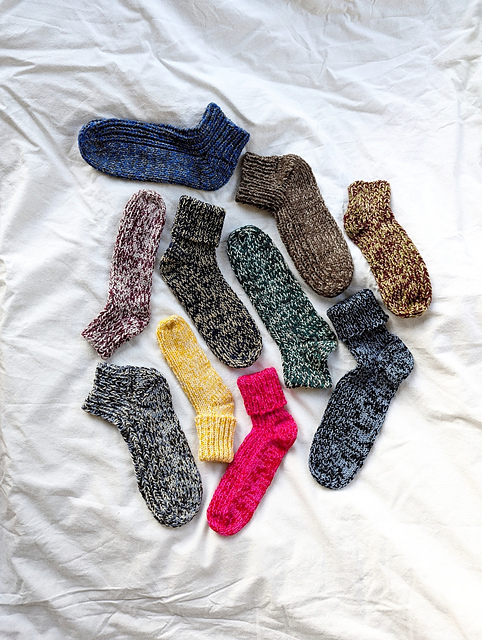
 무료
무료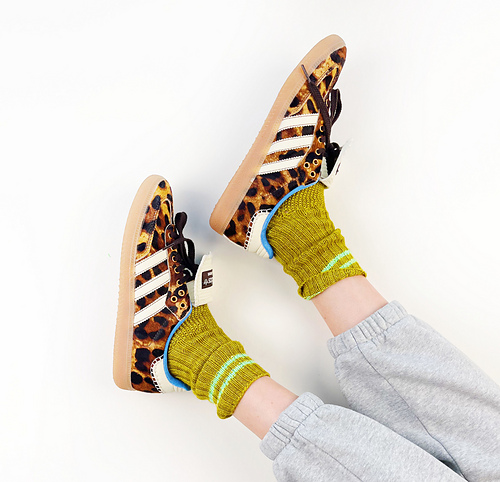
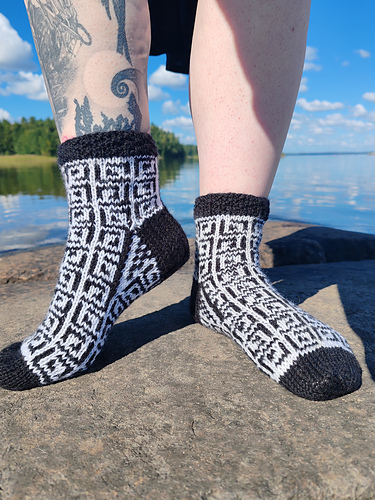
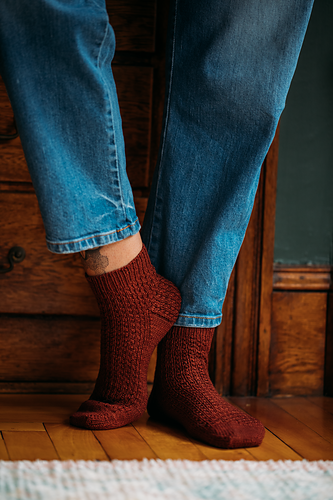
Socks유료 도안
Minimum Effort Socks
디자이너: Milena Juhola
난이도2.4
바늘 크기
3.5mm
실 굵기정보 없음
()
()
좋아요234
ADVERTISEMENT
도안 상세 설명 구글번역기로 번역하기
**ABOUT PATTERN**
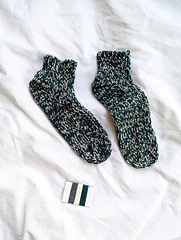
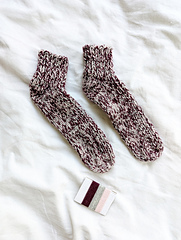
The Minimum Effort socks are chunky ribbed socks. They are worked top down on long circular needles using the magic loop technique. They come in two different versions, so you can choose whether to make them with two or three strands of yarn held together. This is a fun project to use up leftover yarn from previous sock projects. The Minimum Effort socks are quick to make, and they use common and easy sock techniques that are great also for first time sock knitters!
The heel is constructed with German short rows. The short row heel is simple and doesn’t require increasing, decreasing or picking up stitches. The short rows are worked flat (back and forth) over the same circular needles, but otherwise the sock is knit in the round using the magic loop.
The pattern includes a demonstration video of me knitting a sock. The video is meant as a complimentary aid for the written pattern. If you struggle with a technique, you can refer to the video. You can also find lots of tutorials online by searching the techniques by their name.
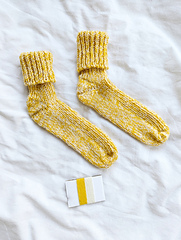
The 2-stranded version is the perfect choice when you need an extra layer of insulation in your shoes to keep your toes warm without compromising on the coolness. They come with a high ribbed cuff which can be worn straight or folded down.
The 3-stranded version is knit very tight to give it a firm structure. The socks are thick, and they come with a low ribbed cuff. Perfect choice when you need to keep your feet safe from cold floors.
**Level of difficulty: Advanced beginner**
**SIZES**
EU shoe sizes 34-35 (36-37) 38-39 (40-41) 42-43 (44-45)
US women’s shoe sizes 3½-4½ (5-6) 6½-7½ (8-9) 9½-10½ (11-12)
**SIZE GUIDE**
The sock sizes are based on shoe sizes. See the list of different shoe sizes to figure out which size to knit.
**SUGGESTED YARN**
You can use any fingering weight sock yarn (4-ply). You will want to look for something that has +/- 400 meters per 100 g of yarn.
Yarn examples:
Fischer Wolle, Feinstrumpf, 50 g = 205 m
Opal, Sock wool, 100 g = 425 m
Regia, Schachenmayr, 100 g = 420 m
Önling no 18, 100 g = 420 m
Isager Sock Yarn, 100 g = 387 m
Estimated yarn consumption by sock type:
2-stranded version
70 (80) 80-90 (90) 95 (110) g
3-stranded version
70 (80) 80 (90) 90 (105) g
In order to calculate how many grams you will need from each color, divide the total estimated weight by 2 or 3 depending on the version you are making.
**GAUGE**
2-stranded version: 18 sts = 10 cm [4 in]
3-stranded version: 16 sts = 10 cm [4 in]
**SUGGESTED NEEDLES**
2-stranded version: 3.5 mm / 80 cm [US 4 / 32 in] or longer circular needles for the magic loop technique
3-stranded version: 4 mm / 80 cm [US 6 / 32 in] or longer circular needles for the magic loop technique
**ADDITIONAL**
- 2 stitch markers
- Measuring tape
- Tapestry needle to weave in the ends
**WORKFLOW**
You will start by casting on stitches for the cuff using the alternating cable cast on method.
The cuff is worked in the round in 1:1 ribbing (k1, p1) until it reaches the correct length.
From there, you will work the heel in stockinette stitch using the short row heel method.
Once the heel is done, the foot is knit in the round to its correct length by working the top of the sock in ribbing and the bottom of the sock in stockinette stitch.
The socks are finished by working the toes in all-over stockinette stitch, and shaped by gradually decreasing the number of stitches towards the tip of the toes.
Once there are only a few stitches left, the tip of the sock is closed with a tapestry needle, using the kitchener stitch method.
* 이 도안은 유료이므로 Ravelry에서 별도 구매가 필요합니다.
비슷한 느낌의 도안들
옆으로 밀어서 보기 →Amama Socks
by wooco うーこ
Sunflower Field Socks
by Nikolett Corley Designs
Konwalia Socks
by Wiktoria Owczarczyk
Charmes Socks
by Dziergane Niebo
Ooey Gooey Sock Set
by Andrea Mowry
무료August Socks 2026
by Bluebird and Daisy
The Comfort Core Sock Set
by Summer Lee
Gallasokker
by Maren Dvergsdal
Lost
by Maria Sampo-Janhu
Oxbow Socks
by Andrea Mowry